Review
Tesla Powerwall 3 review: what it does well, and what it will not do
Powerwall 3 is the most straightforward home battery we install to live with. It will not run your home off-grid.

Michael Brown
2026-08-29
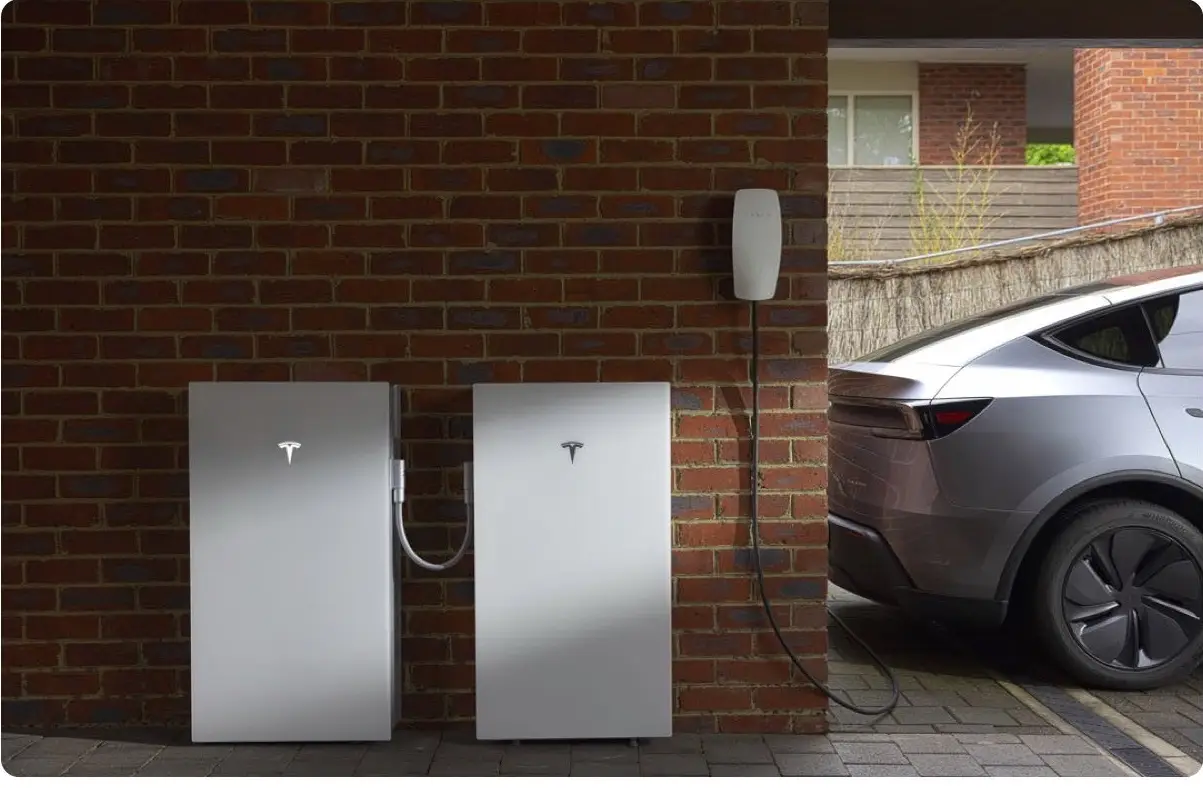
Powerwall 3 is a 13.5 kWh battery with the solar inverter built into it. On a home with no solar yet, that replaces two boxes with one and leaves less on the wall to go wrong. We've put more than nine hundred Tesla Powerwall units on homes around Canberra and the surrounding NSW towns. This is what we've learned about where it fits and where it doesn't.
We install Powerwall 3 and we sell it. The limits are on this page with everything else.
What changed from the Powerwall 2
The Powerwall 2 was a battery. You put a solar inverter next to it. The Powerwall 3 is a battery with the inverter inside, and up to 20 kW of panels connect to it directly.
On a new solar and battery system that means fewer components, fewer connections, and one warranty over both the conversion of sunlight and the storage of it. You get the whole-system design, with no battery bolted on afterwards. On a retrofit to a home that already has a working solar inverter, the gain is smaller. You end up owning two inverters, and only one of them is working with your panels. A retrofit and a new system are two different conversations.
The trade is repairability. Two boxes fail one at a time. One box takes the battery and the inverter out of service together.
Three power ratings, and which one your home gets
Powerwall 3 is sold at three continuous output ratings: 5 kW, 10 kW and 11 kW. Most pages about it print one number. That number is one of the three.
Continuous output is how much of your home the battery can run at once during an outage. At 11 kW that's a normal evening with the oven on. At 5 kW it's a normal evening with some care about what you switch on together. Which rating your home gets is settled at the site inspection, and it is worth asking any installer before you sign, including the one who fits it in Canberra.
What Powerwall 3 will not do
Powerwall 3 will not run your home off-grid. It's a grid-connected battery with backup, not an off-grid system. Those are two different products.
During a blackout it keeps your home running on stored energy, and if the sun is up your panels keep charging it. It cannot be the permanent power supply for a property with no mains connection. If that is what you need, Powerwall 3 is the wrong battery. Enphase and the GoodWe ESA are the two other batteries we fit, and neither of them does off-grid either.
We correct this more often than anything else at a site visit.
Capacity, and how far it expands
One unit is 13.5 kWh usable. A system takes up to four Powerwall 3 units, which is 54 kWh, and up to three Expansions behind them. That is seven units and 94.5 kWh in total.
Very few homes need that much storage. Start with what your home draws between sunset and sunrise, because that is the load a battery has to cover. Working out how big a battery your home needs takes a few minutes, and it is worth doing before you price anything. For most Canberra households one unit covers the overnight load with room left over. The second unit earns less than the first and the third less again, because you're paying for capacity that sits unused on an ordinary night.
If you want more storage later, an Expansion Pack costs less than a second full unit, because it is battery storage without a second inverter.
The three phase Powerwall 3
Tesla makes a three phase Powerwall 3. It is a separate product with its own datasheet: 15.4 kW across three phases, four solar trackers, and whole-home backup on all three. It is heavier, and its wiring compartment carries a lower ingress rating than the battery.
We are not putting that unit on walls yet. If your home is three phase, talk to us about timing before you commit either way.
Tesla Powerwall 3 specifications, side by side
The Tesla Powerwall 3 stores 13.5 kWh of usable energy and delivers 5, 10 or 11 kW of continuous power. The solar inverter is built into the battery itself, so 20 kW of DC solar goes straight into the unit. The Expansion adds another 13.5 kWh behind that same inverter, up to three of them and 54 kWh on one Powerwall 3. The three-phase Powerwall is a European model, launched there in April 2026.
| Property | Tesla Powerwall 3 | Powerwall 3 Three-Phase | Powerwall 3 Expansion |
|---|---|---|---|
| Usable capacity | 13.5 kWh | Coming soon - enquire for more info | 13.5 kWh |
| Continuous power | 5, 10, 11 kW | Not stated | Not stated |
| Solar input | 20 kW DC, straight into the unit | Not stated | Not stated |
| Backup transition | Not stated | Not stated | Not stated |
| Expandable to | Up to 4 units: 54 kWh, plus expansions | Not stated | Three per Powerwall 3, 54 kWh |
| IP rating | IP67 | Not stated | IP67 |
| Operating range | −20°C to 50°C | Not stated | −20°C to 50°C |
| Dimensions | 1105 × 609 × 193 mm | Not stated | 1105 × 609 × 168 mm |
| Weight | 130 kg | Not stated | 110 kg |
| Warranty | 10 years, unlimited cycles | Not stated | 10 years, unlimited cycles |
| Solar inverter | Integrated, 3 MPPTs | Not stated | Not stated |
| Backup | Single phase: whole home Three phase: partial home | Not stated | Not stated |
| Monitoring | Tesla app | Not stated | Tesla app, through the Powerwall 3 |
| Powerwall 2 compatibility | Yes | Not stated | Not stated |
- Tesla Powerwall 3. Tesla Powerwall 3 specification, as published on Sunstak's product page, read 29 July 2026
- Tesla Powerwall 3. Tesla Powerwall 3 datasheet, read 14 August 2026
- Powerwall 3 Three-Phase. Tesla Powerwall 3P datasheet, German edition, read 21 August 2026
- Powerwall 3 Expansion. Tesla Powerwall 3 datasheet (Australia), 19 August 2025 revision, read 21 August 2026
- Powerwall 3 Expansion. Tesla Powerwall Warranty (Australia and New Zealand) Rev 1.16, read 21 August 2026
Living with it
The Tesla app is the part people underrate before they own one and mention first afterwards. You can see what your home is drawing, what your panels are making and what the battery is doing, live. Most people watch it closely for a fortnight and then stop looking, which is what should happen.
Backup is what people mention next. It covers every circuit in your home, so you tend to notice an outage because your neighbours went dark first.
The warranty, and what unlimited cycles means
Ten years, unlimited cycles. Most battery warranties are written the other way, as a number of years or a number of full charge cycles, whichever you reach first.
A cycle cap penalises the household that uses its battery hardest, which is the household that bought one for the right reason. If you fill and empty a battery most days, a cycle cap can arrive years before the ten years do. Tesla's warranty has no cap, and that is one of the better things about the product.
Tesla's warranty covers the unit. We cover the installation ourselves. If your roof leaks after we have been on it, we pay $500 and we fix it. It is worth asking any installer to separate the two when they quote you. Who we are has the detail.
Is Powerwall 3 right for your home?
Powerwall 3 suits you if your home is single phase and you have solar on the roof, or are putting it there. It works hardest when a decent share of your power gets used in the evening. That covers most Canberra households.
Powerwall 3 suits you less if you use most of your power during the day and export little. The same goes if your roof array is small enough that the battery will rarely fill. Either one is worth checking before you spend anything. If you want to leave the grid, that is a different product.
We'll tell you which of those you are, even when it costs us the sale. The project pages show real jobs with the customer quoted on each, and every review we have is published with the score the customer gave.
The federal discount comes off your invoice on the day, and its value is set by your battery's capacity and your install date. The rebates page sets out both schemes, the federal programme has its own page, and the rebate finder works out your own configuration. In the ACT, the ACT loan covers the rest. In the Illawarra, we install across Wollongong from Coniston. What comes off a Powerwall specifically is worked through separately.
How much is a Powerwall 3 in Australia?
The price depends on your switchboard, your phase, how far the unit sits from your board, and whether you already have solar. We work all four out at the site visit.
The federal battery discount comes off your invoice on the day. Its value is set by your battery's capacity and your install date. We work it out on the rebates page.
What are the disadvantages of Powerwall 3?
Powerwall 3 will not run your home off-grid. It keeps your home running through an outage, and it needs a mains connection to work.
Powerwall 3 comes in one size and one capacity, 13.5 kWh. If you need less than that, you are buying more battery than you need. The way up is another whole unit or an Expansion.
The inverter is built in, so a fault takes the battery and the inverter out of service together.
Is Tesla Powerwall 3 worth it?
Powerwall 3 is worth it for a single phase home with solar on the roof and a decent evening load to shift. For that home it is the most straightforward battery on the market to live with.
Powerwall 3 is worth less if you use most of your power during the day, your roof array is small, or you want to go off-grid.
How much will Powerwall 3 cost?
Four things decide it. Your phase, your switchboard, the cable run, and whether solar is already on the roof. We give you an exact number after a site inspection.
The federal discount is worth the same dollar amount whichever installer you use, because it is calculated from capacity and install date. If one quote shows a bigger discount than another for the same battery, look at the price.
Get a quote on a Powerwall 3
A site visit first, then an exact number for your home.